Table of Contents
1. The Foundation: Mastering the Pre-Vacation Water Balance Ritual
2. Tailored Plans: Your Maintenance Strategy Based on Trip Length
3. Understanding the "Why": How Environment Affects Your Absent Tub
4. Smart Solutions: Embracing Technology for Peace of Mind
Don't Let Your Getaway Ruin Your Soak
Imagine this: you return home from a relaxing vacation, eager to unwind in your own outdoor spa, only to lift the cover and be greeted by cloudy water, strange odors, or even algae blooms. The post-holiday bliss evaporates, replaced by the hassle and expense of draining, cleaning, and refilling your hot tub. This frustrating scenario is entirely preventable with proper preparation.
The key to avoiding this lies in understanding one crucial concept: water balance. Balanced water is clean, clear, safe, and gentle on your hot tub's equipment. When you're away, you can't perform your usual weekly testing and adjustments. Environmental factors like temperature swings, sunlight, and evaporation work against you, quickly throwing delicate chemical levels out of sync . An unbalanced state can lead to scale formation, corrosion of components, inefficient sanitizer performance, and a breeding ground for bacteria .
This guide is your comprehensive roadmap. We'll move beyond generic advice and provide you with a deep, actionable understanding of how to prepare your hot tub for any length of absence. Whether you're gone for a long weekend or a month-long adventure, you'll learn the precise steps to ensure you return to pristine, inviting water every single time.
The Foundation: Mastering the Pre-Vacation Water Balance Ritual
No matter how long you'll be away, starting with perfectly balanced water is non-negotiable. Think of this as setting a strong, stable foundation. Here is your step-by-step ritual to perform 24-48 hours before departure.
1. Test Thoroughly
Begin by gathering a reliable water testing kit. While test strips are convenient, for a pre-vacation check, consider a liquid reagent test kit for higher accuracy. You need to test four critical parameters:
Total Alkalinity (TA): The buffer that stabilizes pH. Aim for 80-120 ppm .
pH Level: Measures acidity/alkalinity. The ideal range is 7.2 to 7.8 .
Calcium Hardness: Prevents water from becoming corrosive or scale-forming. Maintain between 150-300 ppm .
Sanitizer Level (Chlorine/Bromine): Your primary defense against contaminants.
2. Adjust in the Correct Order
Chemistry adjustments must follow a sequence. Correcting them out of order is a common pitfall that leads to constant re-adjusting.
First, adjust Total Alkalinity. If TA is low, use an alkalinity increaser. If high, use a pH decreaser (which also lowers TA). Proper TA makes pH stable and easier to manage.
Second, adjust pH. Use pH increaser or decreaser to bring it into the 7.2-7.8 range. Balanced pH ensures sanitizer effectiveness and bather comfort.
Third, adjust Calcium Hardness. Use a calcium hardness increaser if needed. This protects your tub's shell, heater, and plumbing.
Finally, address Sanitizer. Ensure your chlorine or bromine is at the high end of the normal range before you shock.
3. Perform a Pre-Departure "Shock" Treatment
"Shocking" means super-chlorinating or oxidizing the water. This process burns off organic contaminants (body oils, lotions, etc.) that your regular sanitizer struggles with and reactivates bromine banks. It provides a powerful, clean slate. After shocking, run the jets for at least 20 minutes with the cover off to allow gases to dissipate .
4. Clean or Replace the Filter
A clean filter is the heart of your hot tub's circulation system. A dirty filter restricts water flow, reduces cleaning efficiency, and strains the pump. Before leaving, remove the filter cartridge and rinse it thoroughly with a hose. For a longer trip, consider a deep clean with a filter cleaner solution or even swapping in a freshly cleaned spare filter .
5. The Final Touch: Secure the Cover
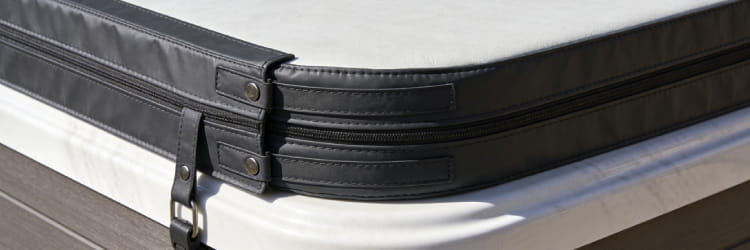
Your insulated cover is your first line of defense. Ensure it is clean, dry, and locked down tightly. A secure cover minimizes evaporation, retains heat, and blocks out debris and sunlight .
Tailored Plans: Your Maintenance Strategy Based on Trip Length
A one-size-fits-all approach doesn't work. Your preparation strategy must adapt to the duration of your absence. Here’s a detailed breakdown.
Short Getaways: 3-5 Days
For most well-balanced tubs, a short trip requires minimal extra effort.
Action Plan: Simply follow the Foundation Ritual above. Ensure sanitizer levels are at the high end of normal, perform a shock, clean the filter, and lock the cover.
Pro Tip: You can often leave the heater at your preferred soaking temperature. The energy cost over a few days is typically low, and it ensures you have a ready-to-use tub upon return.
Extended Vacations: 1-2 Weeks
This is the most common scenario requiring specific preparation. The goal is to create a slow-release maintenance system.
Action Plan:
Complete the full Foundation Ritual.
Add a Floating Sanitizer Dispenser: This is the cornerstone of week-plus care. Fill a floating dispenser with stabilized chlorine or bromine tablets. Adjust the vent settings to a slow/medium dissolution rate based on your tub's volume and the anticipated weather (warmer weather accelerates chemical use).
Consider a Supplemental Oxidizer: For added insurance, you can add a dose of a non-chlorine shock (MPS) before leaving. It helps oxidize contaminants without affecting chlorine levels.
Lower the Temperature: Reducing the thermostat to 85-90°F (29-32°C) is highly recommended . This significantly slows bacterial growth, reduces evaporation and scaling potential, and cuts energy consumption by up to 50%.
Secure the Cover: Double-check its seal.
Long-Term Absence: 3 Weeks to 1 Month+
For very long trips, the risks of equipment issues (like a power outage causing a freeze) and complete chemical depletion increase. Here, you have two responsible options.
Option A: The "Winterization-Lite" Maintenance Mode (For mild climates or if you have someone to check)
Perform the Foundation Ritual and shock.
Lower the temperature to the minimum setting (often around 80°F / 27°C).
Ensure the floating dispenser is full and set correctly.
Crucially, arrange for a trusted person to check on the tub every 10-14 days. Their task is simple: visually verify the cover is secure, ensure the power is on, and note if the floating dispenser is empty. Provide them with pre-measured sanitizer to add if needed .
Option B: The Complete Shutdown & Drain (The safest option for long, unattended periods)
If you cannot arrange for any check-ins, or are leaving during freezing weather, a full shutdown is the most foolproof method to prevent damage.
Perform a final shock treatment.
Turn off the power at the circuit breaker.
Completely drain the tub using the drain valve or a submersible pump.
Blow out the plumbing lines with an air blower (following your manufacturer's guide) to prevent residual water from freezing and cracking pipes—this is critical in cold climates .
Remove and clean the filter thoroughly, letting it dry store.
Leave the cover off or slightly ajar to prevent moisture and mildew buildup inside the dry shell.
Note: Refilling and rebalancing a drained tub will be your task upon return, but it guarantees no surprises.
Trip Duration | Key Actions | Temperature Setting | Sanitizer Strategy | Recommended For |
3-5 Days | Full Balance, Shock, Clean Filter | Normal Use Temp | High Normal Level | Short trips, stable water |
1-2 Weeks | Full Balance, Shock, Clean Filter | Lower (85-90°F / 29-32°C) | Floating Chlorine/Bromine Dispenser | Standard vacations |
3 Weeks+ | Full Balance, Shock | Very Low (~80°F / 27°C) or Drain | Floating Dispenser + Helper Check | Long trips with support |
1 Month+ (Unattended) | Shock & Drain | N/A (Drained) | N/A (Drained) | Long trips, freezing risk, no helper |
Understanding the "Why": How Environment Affects Your Absent Tub
To prepare effectively, it helps to know what you're preparing against. The two main environmental adversaries are heat and sunlight.
1. The Impact of High Temperature
Accelerated Chemistry: All chemical reactions speed up in warmer water. This means your sanitizer gets used up faster fighting bacteria, and pH can drift more quickly .
Increased Evaporation: Heat causes more water to evaporate, but the minerals and chemicals (Calcium, Chlorine) do not evaporate. This leads to a concentration of total dissolved solids (TDS), making the water aggressive, potentially causing scale on the heater and cloudiness .
Algae and Bacteria Party: Warm, stagnant water with low sanitizer is the perfect breeding ground for microorganisms .
2. The Impact of Sunlight
Sanitizer Depletion: Ultraviolet (UV) rays from the sun break down chlorine very rapidly. Even with a cover on, sunlight can degrade sanitizer levels over time.
Material Stress: Direct, prolonged sunlight can cause fading and weathering of your hot tub's cover and cabinet .
Mitigation Strategies:
Lower the Temperature: As outlined, this is your single most effective move to counter heat-related issues.
Use a Cover: It physically blocks UV rays and insulates against heat loss or gain.
Consider a Thermal Blanket: An extra floating blanket on the water's surface adds an insulation layer, further reducing evaporation and heat loss.
Strategic Placement: If possible, position or use a shade structure for your outdoor tub to limit direct sun exposure.
Smart Solutions: Embracing Technology for Peace of Mind
Modern technology offers fantastic tools to automate and monitor your hot tub, transforming vacation prep from a chore into a set-it-and-forget-it task.
1. Automated Chemical Monitoring & Dosing Systems
These are game-changers. Systems like the Clarifex® use sensors to continuously monitor water chemistry and automatically dispense sanitizer and pH adjusters as needed . For a vacation, you simply ensure the chemical reservoirs are full. The system maintains perfect balance autonomously.
2. Smart Controllers with Remote Monitoring
Many modern hot tubs come with Wi-Fi-enabled controls. Apps like those associated with Touch System allow you to control your tub from anywhere . You can:
Monitor water temperature and adjust it remotely (e.g., lower it for the trip, raise it the day before you return).
Receive alerts for critical issues like a drop in temperature (indicating a heater failure or power outage), or high/low sanitizer if paired with a sensor .
Control pump cycles to ensure periodic circulation even in your absence.
3. Saltwater Systems
While not fully "hands-off" for a vacation, saltwater systems generate chlorine automatically from salt. They provide a more consistent sanitizer residual. For a 1-2 week trip, ensuring the salt cell is clean and the generator is set correctly can provide great peace of mind.
Investing in these technologies means your hot tub is actively caring for itself while you're away, dramatically reducing pre-trip anxiety and post-trip cleanup.
Your Action Plan for a Worry-Free Vacation
Preparing your hot tub for vacation isn't about luck; it's about applying a systematic, knowledge-based approach. Let's distill everything into a simple action plan:
Diagnose & Balance (1-2 days before): Test and adjust your TA, pH, Calcium Hardness, and Sanitizer in that order. Shock the water.
Clean: Give your filter a thorough rinse or cleaning.
Strategize by Time: Consult the table above. For a week or more, lower the temperature and deploy a floating sanitizer dispenser. For very long trips, plan for a helper check or consider a safe shutdown and drain.
Seal & Secure: Lock down a clean, tight-fitting cover.
Leverage Tech (If you have it): Use your smart app to monitor and adjust settings remotely. Ensure automated chemical feeders are stocked.
By following this guide, you transform your hot tub from a potential source of post-vacation stress into a guaranteed oasis of relaxation awaiting your return. You've invested in the joy of an outdoor spa; a small investment of time in proper preparation protects that investment and ensures your first soak back home is as perfect as your time away. Now, go pack your bags with confidence.