Table of Contents
1. The Cornerstone of Clarity: Mastering Weekly Water Chemistry
2. The Unsung Hero: Filter Care and Surface Skimming
3. The Supporting Cast: Essential Physical and Sensory Checks
4. The Future is Now: Embracing Smart Maintenance in 2026
5. Your Weekly Ritual for Endless Relaxation
Welcome to your personal oasis! There's nothing quite like the feeling of sinking into the warm, bubbling waters of your outdoor spa after a long day. It’s a place of relaxation, connection, and rejuvenation. But to keep that pristine paradise ready for you at a moment's notice, a little bit of regular care is essential. The word "maintenance" can sound intimidating, but what if we told you that just 15-20 minutes a week is all it takes to ensure your hot tub runs flawlessly and its water remains crystal clear?
Consistent upkeep is the secret to preventing common issues like cloudy water, skin irritation, and costly equipment damage . Think of it not as a chore, but as a simple ritual that protects your investment and guarantees years of blissful soaking. This guide is your definitive weekly checklist, breaking down the essential tasks into simple, manageable steps. We'll cover everything from water chemistry to filter care, ensuring you have the confidence and knowledge to maintain your outdoor tub like a pro.
The Cornerstone of Clarity: Mastering Weekly Water Chemistry
The single most important aspect of hot tub maintenance is managing the water chemistry. It's the foundation upon which everything else is built. Water that is "unbalanced" isn't just unpleasant to soak in; it can actively cause damage to your spa's delicate components, such as heaters, pumps, and seals, and create an environment where bacteria can thrive . Your weekly chemistry check is a non-negotiable step for safety, comfort, and the longevity of your outdoor spa.
Your Weekly Water Testing Trio: The "Big Three"
Each week, you'll need to test and adjust three primary chemical levels using water test strips or a liquid test kit. While other factors like calcium hardness are also important, they typically don't require weekly adjustment. Here are the three key players and their ideal ranges, according to industry consensus.
Chemical Level | Ideal Range | Purpose & Importance |
pH Level | 7.2 – 7.8 | Measures how acidic or basic your water is. If the pH is too low (acidic), it can corrode equipment and cause skin/eye irritation. If it's too high (basic), it can cause cloudy water and significantly reduce the effectiveness of your sanitizer . |
Total Alkalinity (TA) | 80 – 120 ppm | Acts as a buffer to stabilize your pH. Think of it as an anchor for your pH level. When alkalinity is in the correct range, it prevents drastic and rapid pH fluctuations, making it much easier to keep your water balanced . |
Sanitizer | Chlorine: 1.0–3.0 ppmBromine: 3.0–5.0 ppm | This is the disinfectant that kills bacteria and keeps your water safe and clean. Chlorine and bromine are the most common options. Bromine is often favored for hot tubs as it remains stable at higher temperatures and has a less potent odor than chlorine . |
Step-by-Step Guide to Testing and Balancing
1.Gather a Sample: Take a water sample from elbow-deep in your outdoor tub, away from any jets or chemical dispensers, to get an accurate reading.
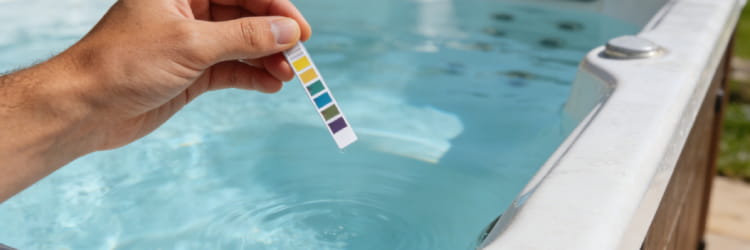
2.Test the Water: Dip your test strip into the sample for the duration specified on the packaging (usually just a few seconds). Remove it without shaking off excess water and wait for the color pads to develop (typically 15-30 seconds).
3.Read the Results: Compare the colors on your strip to the chart on the bottle. Make a note of your pH, Total Alkalinity, and Sanitizer levels.
4.Adjust in Order: Always adjust your water chemistry in the following order, as each step affects the next:
l First, adjust Total Alkalinity. If it's low, use an alkalinity increaser. If it's high, use a pH decreaser (which also lowers alkalinity). Run the jets for 20-30 minutes and re-test before moving on.
l Second, adjust pH. Once your alkalinity is stable, adjust the pH using a pH increaser or decreaser as needed.
l Finally, adjust your Sanitizer. Add chlorine or bromine granules or tablets to bring the level into the ideal range.
The Weekly "Shock": Revitalizing Your Water
Once your core levels are balanced, it's time to "shock" your hot tub. This doesn't mean zapping it with electricity! Shocking means adding a dose of an oxidizing agent (like a non-chlorine shock or a concentrated dose of chlorine) to the water.
Why is this a critical weekly step? Over the week, your sanitizer gets busy fighting off bacteria, but it doesn't deal with the other things that get into the water: sweat, body oils, lotions, and other organic matter. These contaminants, known as chloramines or bromamines, cause cloudy water, unpleasant odors, and use up your sanitizer, making it less effective .
A weekly shock treatment breaks down these contaminants, frees up your sanitizer to do its primary job of killing bacteria, and restores the water to a sparkling, fresh state .
How to Shock Your Hot Tub:
1.Remove the hot tub cover to allow the water to off-gas.
2.Turn on the jets to circulate the water.
3.Carefully measure and add the shock product according to the manufacturer's instructions, distributing it across the water's surface.
4.Let the jets run for at least 20 minutes with the cover off.
5.Wait until the sanitizer level returns to its normal range (1.0-3.0 ppm for chlorine, 3.0-5.0 ppm for bromine) before using the hot tub again. This can take several hours.
The Unsung Hero: Filter Care and Surface Skimming
If water chemistry is the science of a healthy hot tub, the filter is its hardworking circulatory system. It diligently traps everything you don't want in your water—hair, dirt, oils, and other particles. Neglecting it is one of the most common mistakes an owner can make.
Your Filter: The Hardest Working Component in Your Outdoor Spa
Every drop of water in your outdoor tub passes through the filter multiple times a day. When the filter becomes clogged with debris, it forces the pumps to work harder, restricting water flow and reducing the effectiveness of your jets . In severe cases, a clogged filter can strain the pump motor, leading to expensive repairs, and will invariably result in cloudy, uninviting water . A clean filter is fundamental to both water clarity and equipment health.
The Weekly Filter Rinse: A 5-Minute Task for Maximum Impact
While expert opinions on cleaning frequency vary slightly based on usage, the overwhelming consensus for a regularly used hot tub is a simple weekly rinse . This quick task removes the loose surface debris before it can become deeply embedded in the filter material. For those who use their spa less frequently, a rinse every two weeks may suffice .
Here is the step-by-step process for a perfect weekly rinse:
1.Safety First: Power Down. Before you do anything, turn off the power to your hot tub at the main circuit breaker. This prevents the pumps from turning on while the filter is removed, which could cause damage .
2.Access and Remove the Filter. Locate your filter compartment. This is usually under a weir door or in a dedicated canister. Unscrew or unlatch the housing and carefully lift the filter cartridge out.
3.Perform a Quick Inspection. Take a moment to look over the filter. Check for any tears in the fabric, cracks in the plastic ends, or signs that the pleats are collapsing or flattening. If you see significant damage, it's time for a replacement.
4.Rinse Thoroughly (The Right Way). Using a garden hose with a spray nozzle, systematically rinse the filter. Do not use a high-pressure washer, as this can damage the delicate filter media . Start at the top and work your way down, angling the spray to get deep between each pleat. Rotate the filter as you go, ensuring you've rinsed every surface until no more debris is coming out.
5.Reinstall and Secure. Carefully place the clean filter back into its housing, ensuring it is seated correctly. Secure the lid or cap.
6.Power Up and Restart. Turn the power back on at the breaker. Your hot tub will likely start a priming cycle.
Pro Tip: In addition to your weekly rinse, it is an industry best practice to perform a monthly deep clean. This involves soaking the filter for several hours or overnight in a chemical filter cleaning solution to break down oils and lotions that water alone can't remove . Many owners keep two filters on hand so they can swap in a clean one immediately while the other soaks.
Beyond the Filter: Tackling the Waterline and Skimmer
While the filter is out, it’s the perfect time for two other quick tasks:
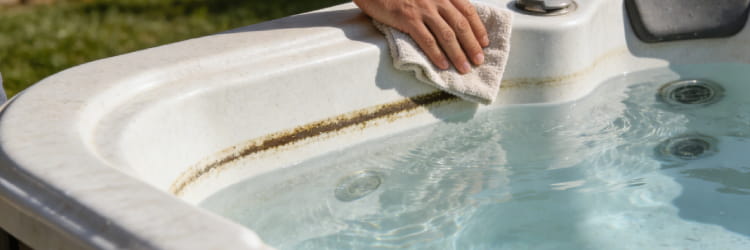
l Wipe the Waterline: Body oils, lotions, and other grime tend to float and create a "scum line" around the shell of the hot tub. Use a soft cloth or a specialized spa cleaning sponge to wipe this line down . Avoid using household cleaners, which can introduce soaps and phosphates into your water and cause foam.
l Clear the Skimmer: Check the skimmer basket (the area where water is drawn towards the filter) for any large debris like leaves, bugs, or hair. Removing this prevents it from reaching and clogging your filter.
The Supporting Cast: Essential Physical and Sensory Checks
Your weekly maintenance routine is the perfect opportunity to give your outdoor tub a quick physical health check. This part of the checklist moves beyond water and filters to the physical structure and function of your spa, allowing you to catch small issues before they become big problems.
More Than Just Water: The Physical Health of Your Outdoor Tub
By incorporating a simple walk-around inspection into your weekly routine, you become more familiar with the normal sights and sounds of your hot tub. This makes it much easier to notice when something is amiss. It's about using your eyes and ears to ensure the entire system is in good working order.
Your Weekly Walk-Around Inspection Checklist
After you've finished with your water and filter care, take a final two minutes to run through these simple physical checks:
l Check the Water Level: This is a surprisingly critical check. The water level in your outdoor tub should always be above the highest jets, typically about halfway up the skimmer opening . If the water level drops too low, the pumps can draw in air instead of water, causing them to lose prime and potentially burn out the motor. Top up the water with your garden hose as needed .
l Inspect and Wipe the Cover: Your hot tub cover is one of its most important accessories. It provides safety, keeps debris out, and, most importantly, insulates the water to save a significant amount of energy. Each week, give the top of the cover a quick wipe-down with a clean cloth to remove any accumulated dirt, pollen, or standing water . Lift it to check the underside for any signs of mold, mildew, or tearing in the vapor barrier. A waterlogged cover is extremely heavy and has lost its insulating properties, meaning it's time for a replacement.
l Observe the Jets and Controls: While the pumps are running (perhaps after you've added your chemicals), take a moment to look at the jets. Is the pressure consistent? Are any jets not working? Test a few diverter valves to ensure they are redirecting water flow as expected. Glance at your topside control panel to ensure the display is clear and all buttons are responsive.
l Listen for Unusual Noises: A healthy hot tub has a familiar hum. Pay attention to the sounds your pumps and motors make. If you hear any new or unusual noises—such as grinding, high-pitched whining, or loud rattling—it could be an early warning sign of a problem with the pump's bearings or a piece of debris in the impeller (related to . Investigating these sounds early can often prevent a major failure.
The Future is Now: Embracing Smart Maintenance in 2026
As we stand here in late 2026, the world of hot tub ownership is evolving. The maintenance tasks we've discussed are timeless essentials, but technology is now offering powerful new tools to make them easier, more precise, and more convenient than ever before.
Hot Tub Maintenance Gets a High-Tech Upgrade
The "smart home" concept has fully extended to the backyard, and modern outdoor spas are increasingly equipped with intelligent systems designed to streamline care . These aren't gimmicks; they are practical innovations that give you more control and insight into the health of your hot tub.
Key smart maintenance features that have become best practices include:
l Remote Monitoring and Control: The most significant advancement is the ability to connect your hot tub to your home's Wi-Fi. Through a dedicated smartphone app, you can monitor and control your spa from anywhere in the world . You can adjust the temperature, turn on the jets, control the lights, and—most importantly for maintenance—check the status of your filtration cycles and receive real-time alerts . This means no more worrying about your hot tub while you're on vacation.
l Automated Water Care Systems: While they don't eliminate the need for manual testing, many high-end outdoor tubs now feature integrated systems that help maintain water quality. These can range from automatic sanitizer dispensers that release a slow, steady amount of chlorine or bromine to advanced purification systems using ozone gas or UV-C light. These systems work alongside your primary sanitizer to oxidize contaminants, significantly reducing the amount of chemicals you need to add manually .
l Intelligent Alerts and Reminders: A smart hot tub can act as your personal maintenance assistant. The system can track usage and filtration cycles, sending a notification directly to your phone when it's time for your weekly tasks, like "Time to rinse your filter" or "Add weekly shock treatment" . Furthermore, they can monitor for potential issues like a significant temperature drop (indicating a heater or cover problem) or a flow error, allowing you to address problems proactively.
How Automation Assists, But Doesn't Replace, Your Weekly Check
These technologies are game-changers. They can automate the more tedious aspects of chemical management and provide an invaluable safety net of alerts. However, it's crucial to view them as powerful assistants, not complete replacements for your weekly routine.
A smartphone app can't physically wipe down your spa's waterline, remove leaves from the skimmer, or listen for a rattling pump motor. It can't inspect your cover for damage or see that a jet nozzle has popped out. The hands-on, physical and sensory checks remain an indispensable part of holistic hot tub care. The ideal approach in 2026 is to combine the best of both worlds: let technology handle the precision monitoring and reminders while you perform the essential hands-on tasks that ensure the complete health and longevity of your personal oasis.

Your Weekly Ritual for Endless Relaxation
Maintaining an outdoor spa doesn't have to be a complex or time-consuming burden. By breaking it down into a simple, repeatable weekly checklist, you transform a potential chore into a quick and empowering ritual. In just 15 to 20 minutes, you can confidently tackle the three core pillars of hot tub health:
l Water Chemistry: Test and balance your pH, alkalinity, and sanitizer, finishing with a weekly shock to keep the water pristine and safe.
l Filter & Surface Care: Give your filter a thorough rinse to ensure optimal water flow and clean the waterline to prevent scum buildup.
l Physical Checks: Look at the water level, inspect the cover, and listen to your equipment to catch any potential issues early.
This small weekly investment pays enormous dividends. It guarantees that every time you decide to take a soak, your outdoor tub is clean, safe, and perfectly ready for you. It protects your spa's equipment from preventable damage, saving you money and headaches in the long run.
Don't let maintenance stand between you and the relaxation you deserve. Embrace this simple checklist as the key to unlocking consistent, worry-free enjoyment of your backyard retreat. Your personal oasis is waiting.