Table of Contents
1.Introduction: The Frustration of Murky Water
2.Unmasking the Culprits: The Three Core Causes of Cloudiness
3.Your Action Plan: A Step-by-Step Guide to Restoring Crystal-Clear Water
4.The Proactive Approach: Best Practices for Preventing Cloudy Water
5.Conclusion: Clarity as a Commitment
1. The Frustration of Murky Water
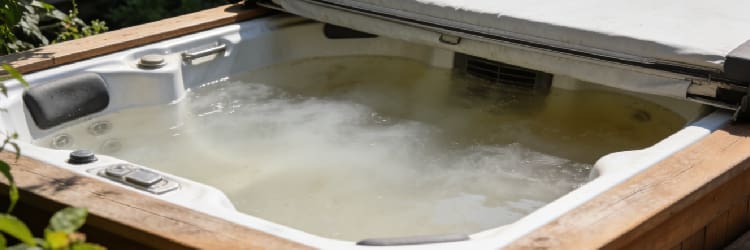
There are few things more inviting than the prospect of a relaxing soak in your outdoor spa after a long day. You lift the cover, anticipating the soothing warmth and bubbling jets, only to be met with a disappointing sight: cloudy, murky, and uninviting water. This common issue is a source of frustration for many hot tub owners, transforming a luxurious retreat into a maintenance puzzle.
Cloudy water is more than just an aesthetic problem; it's a clear signal that something is amiss within your outdoor tub's ecosystem. It can indicate the presence of harmful bacteria, ineffective sanitation, or equipment that isn't performing optimally. Fortunately, resolving and preventing murky water is entirely achievable with the right knowledge and a systematic approach.
This comprehensive guide is designed to demystify the problem of cloudy hot tub water. We will delve into the primary causes—spanning chemical, biological, and mechanical factors—and provide a clear, step-by-step troubleshooting plan to restore your water's sparkle. Furthermore, we will equip you with proactive strategies to ensure your hot tub remains a pristine sanctuary of relaxation.

2. Unmasking the Culprits: The Three Core Causes of Cloudiness
Understanding why your water has lost its clarity is the first step toward a solution. The causes can almost always be traced back to one or more of three interconnected categories: chemical imbalances, biological contamination, and mechanical filtration issues.
Chemical Imbalances: The Invisible Chemistry at Play
The water in your hot tub is a delicate chemical environment. When key parameters drift outside their ideal ranges, a chain reaction can occur, often resulting in cloudiness.
l Improper pH and Total Alkalinity: Think of Total Alkalinity (TA) as the anchor for your pH. If your TA is too low, the pH level will be unstable and can fluctuate wildly. Conversely, if both TA and pH are too high, it can lead to scale formation and cause calcium to precipitate out of the solution, creating a milky or cloudy appearance . A pH level that is either too high or too low will also drastically reduce the effectiveness of your sanitizer (like chlorine or bromine), leaving the water vulnerable to contaminants . Maintaining the correct balance is therefore critical not only for clarity but for overall water health.
l Low Sanitizer Levels: Sanitizers are the primary defense against microorganisms. When the level of your chosen sanitizer (chlorine or bromine) drops too low, it can no longer effectively neutralize bacteria, algae, and other organic waste . This uncontrolled growth of microscopic particles is a direct cause of hazy, cloudy water .
l High Total Dissolved Solids (TDS): Over time, every chemical, organic compound, and mineral added to or carried into your spa contributes to the Total Dissolved Solids level. As TDS rises, the water becomes "saturated" and can no longer effectively dissolve chemicals, making it difficult to maintain balance . High TDS levels are a common cause of persistent cloudiness and indicate that it may be time to drain and refill your hot tub .
l Excessive Chemical Use: In an effort to correct a problem, it's easy to go overboard. Adding too much of any chemical, from pH adjusters to shock treatments, can oversaturate the water and create its own form of cloudiness .
Biological Contamination: The Unseen Invaders
Every time someone enters the hot tub, they introduce a host of organic materials that the sanitizer and filter must handle.
l Bather Waste and Organics: The primary source of biological contaminants is the users themselves. Sweat, body oils, lotions, cosmetics, hair products, and even detergents on swimwear introduce a significant organic load into the water . When the sanitizer is overwhelmed, these compounds remain suspended, contributing to a murky, unappealing appearance .
l Bacteria and Algae Growth: In the warm, water-rich environment of an outdoor spa, bacteria and algae can multiply rapidly if sanitizer levels are insufficient . These microorganisms form colonies that are visible to the naked eye as cloudiness or haze long before they become a more serious slime or algae bloom .
l Biofilm Development: Biofilm is a slimy, protective layer of bacteria that can adhere to the surfaces of your hot tub's plumbing, jets, and shell. This film can harbor and protect harmful bacteria from your sanitizer . Periodically, clumps of biofilm can break off and enter the water, causing sudden and persistent cloudiness.
Mechanical Failures: When Your Equipment Needs Help
Your hot tub's filtration and circulation system is the final piece of the clarity puzzle. If it's not working correctly, even perfectly balanced water can become cloudy.
l Dirty or Clogged Filters: The filter's job is to trap and remove the very particles that cause cloudiness. A filter that is dirty, clogged with oils and debris, or past its lifespan cannot do its job effectively . Water will bypass the clogged filter media, allowing contaminants to recirculate freely throughout the spa, leading to persistent murkiness . This is one of the most common and easily fixable causes of cloudy water.
l Inadequate Circulation/Filtration Cycles: For the filter to work, water must be actively moving through it. If the pump and filtration cycles are not running long enough each day, the entire volume of water may not be filtered adequately. This allows suspended particles to accumulate . Most modern outdoor tubs have pre-programmed or adjustable filtration cycles; ensuring they run for at least a few hours daily is essential.
3. Your Action Plan: A Step-by-Step Guide to Restoring Crystal-Clear Water
Confronted with cloudy water, it's tempting to start indiscriminately adding chemicals. However, a methodical approach will save you time, money, and frustration. Follow these steps to diagnose and resolve the issue efficiently.
Step 1: The Foundation - Assess and Clean Your Filter
Before you touch any chemicals, start with the mechanical heart of your system. A clean filter is non-negotiable for clear water.
1.Turn off the power to your hot tub at the breaker.
2.Remove the filter cartridge(s) according to your manufacturer's instructions.
3.Inspect the filter. Is it caked in grime? Discolored? Damaged?
4.Clean the filter thoroughly. For a routine clean, use a high-pressure hose nozzle to spray down between each pleat, dislodging debris . For a deep clean, soak the filter overnight in a specialized filter cleaning solution to break down oils and lotions, then rinse thoroughly .
5.Replace if necessary. If the filter media is frayed, collapsed, or more than 12-18 months old, it's time for a replacement. A new filter is one of the best investments in water clarity .
Step 2: Diagnosis - Test Your Water Chemistry
With a clean filter in place, it's time to understand the chemical situation. Use a reliable test kit or test strips to get accurate readings of the following key parameters :
l Total Alkalinity (TA): Ideal range is typically 80-120 ppm (parts per million).
l pH: Ideal range is typically 7.4-7.6.
l Sanitizer Level: For chlorine, 1-3 ppm. For bromine, 3-5 ppm.
l Calcium Hardness: Ideal range is typically 150-250 ppm.
Write these numbers down. They are your roadmap for the correction phase.
Step 3: The Correction Phase - Balance, Sanitize, and Shock
Address the chemical imbalances in a specific order for the most effective results. Always run the jets when adding chemicals to ensure proper distribution, but keep air valves (waterfalls, air jets) closed to prevent off-gassing.
1.Adjust Total Alkalinity First: Your TA stabilizes the pH, so it must be corrected first . Use an alkalinity increaser or decreaser as needed, following package directions. Wait a few hours before moving to the next step.
2.Adjust pH Second: Once the TA is in range, adjust your pH to fall between 7.4 and 7.6 using a pH increaser or decreaser . Proper pH is crucial for sanitizer efficacy.
3.Shock the Water: "Shocking" or "oxidizing" the water is a critical step for eliminating the contaminants causing cloudiness . This process involves adding a large dose of an oxidizing agent to break down organic waste, kill bacteria, and reactivate your sanitizer . Use a non-chlorine shock or a chlorinated shock, depending on your system and following the product's instructions for dosage based on your spa's volume. Leave the cover off for at least 20-30 minutes after shocking to allow gases to vent .
Step 4: The Finishing Touch - Clarifiers and Patience
After shocking, many of the microscopic particles that were causing the cloudiness will be oxidized and clumped together. Your freshly cleaned filter will now begin to trap them.
l Run the Filtration System: Allow the pumps to run on a filtration cycle for several hours, or even overnight, to give the filter time to capture the suspended debris.
l Use a Water Clarifier (Optional): If the water is still slightly hazy after a few hours, you can use a water clarifier . This product works as a coagulant, causing tiny, filter-passing particles to bind together into larger clumps that the filter can easily trap . Use it sparingly and as a final polishing step, not a primary solution.
The following table summarizes the troubleshooting workflow:
Action | Rationale |
Clean or Replace Filter | Removes the primary mechanical barrier to clarity and ensures effective filtration of suspended particles. |
Test Water Chemistry | Provides a clear diagnosis of any chemical imbalances causing or contributing to the cloudiness. |
Adjust Alkalinity, then pH | Balances the water's foundation, ensuring the sanitizer will be effective once added. |
Shock the Water | Chemically destroys organic contaminants, bacteria, and other waste products causing the murkiness. |
Run Pumps / Circulate | Ensures chemicals are distributed and allows the clean filter to remove the neutralized particles. |
Use a Water Clarifier (Optional) | Acts as a final "polishing" agent to bind the smallest particles for easier filtration. |
4. The Proactive Approach: Best Practices for Preventing Cloudy Water
Restoring clarity is rewarding, but preventing cloudiness in the first place is the ultimate goal. Consistent maintenance and good habits are the keys to perpetually clear water.
Cultivating a Routine: The Rhythm of Maintenance
A simple, regular maintenance schedule is the most effective way to prevent the imbalances that lead to cloudy water.
l Test Weekly: Test your water at least once or twice a week and adjust chemicals as needed. This allows you to catch and correct minor drifts before they become major problems .
l Clean Filters Regularly: Rinse your filter(s) weekly or bi-weekly and perform a deep chemical soak monthly. This maintains optimal filtration performance .
l Shock Weekly: A regular weekly shock treatment helps to consistently oxidize contaminants introduced through use, preventing their buildup .
l Drain and Refill Periodically: Depending on usage, drain and refill your outdoor tub every 3 to 6 months. This is the ultimate reset, removing the buildup of Total Dissolved Solids that inevitably occurs over time .
User Habits: The Human Factor in Water Clarity
Educating yourself and your guests on best practices can significantly reduce the contaminant load on your spa.
l Shower Before Soaking: A quick rinse without soap removes most lotions, deodorants, and body oils, preventing them from entering the water .
l Keep Swimwear Separate: Avoid washing swimwear used in the hot tub with detergents and fabric softeners, as residual soaps can cause foaming and cloudiness. Rinse suits in water only .
l Secure the Cover: Always keep your hot tub securely covered when not in use. This prevents environmental debris like pollen, leaves, and rainwater from contaminating the water.
Embracing Innovation: Modern Solutions for Easier Maintenance
Recent advancements in water care technology can significantly simplify the task of maintaining clear water, reducing chemical reliance and manual effort.
l Advanced Sanitization Systems: Many modern hot tubs offer integrated systems that supplement traditional sanitizers. Ozone generators, UV-C light systems, and mineral cartridges all work to neutralize contaminants, reducing the amount of chlorine or bromine needed . These systems provide an additional layer of protection against the causes of cloudiness.
l Automated Water Management: The cutting edge of spa maintenance involves smart technology. Automated chemical dosing systems and water monitoring sensors can test the water in real-time and dispense the necessary chemicals automatically . Some systems can even send alerts to your smartphone when attention is needed, taking the guesswork out of water balancing . While these systems simplify maintenance, they don't completely eliminate the need for fundamental practices like filter cleaning and periodic draining .
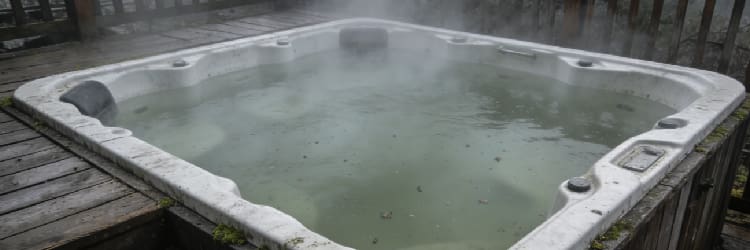
Cloudy hot tub water is a solvable problem. It serves as a visual cue that the delicate balance of your spa's ecosystem needs attention. By understanding the three primary culprits—chemical, biological, and mechanical—you can move beyond guesswork and apply a targeted, effective solution.
The key to long-term success lies in a simple, proactive maintenance routine. Regular testing, consistent filter cleaning, and mindful usage habits form the bedrock of pristine water care. While advanced technologies can make this process easier, they are aids to, not replacements for, this fundamental commitment.
By following the systematic troubleshooting guide and adopting a preventive maintenance schedule, you can ensure your outdoor spa or tub remains what it was always meant to be: a crystal-clear, inviting, and reliable source of relaxation and well-being.