
Table of Contents:
1.Understanding Heat Loss in Hot Tub Plumbing
2.Choosing the Right Insulation Materials
3.Installation Best Practices & Cost Savings
Understanding Heat Loss in Hot Tub Plumbing
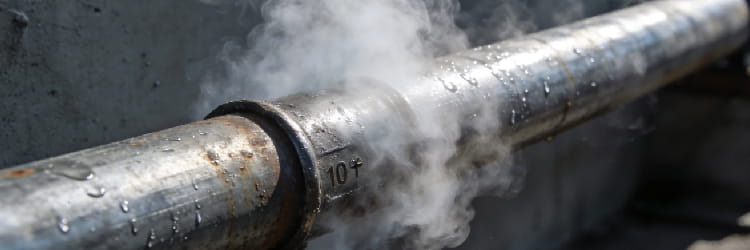
One of the most overlooked factors in outdoor spa maintenance is the heat loss occurring within the plumbing that supplies water to the tub. Uninsulated pipes can act as a thermal highway, draining energy from your system even when the hot tub is idle.
Why it matters:
l Significant Energy Drain: A bare 2-inch hot water pipe operating at 160°F can lose up to 1400 BTU/hour per 10 feet of pipe length. This loss translates directly into higher electricity or gas bills.
l Reduced Comfort: Heat loss leads to longer wait times for hot water to reach the tub, especially during colder months.
l Environmental Impact: Excessive energy consumption not only raises costs but also increases the carbon footprint of your outdoor tub usage.
Choosing the Right Insulation Materials
Not all insulation is created equal. Selecting the appropriate material and thickness is crucial for effective heat retention.
Recommended Materials & Specifications:
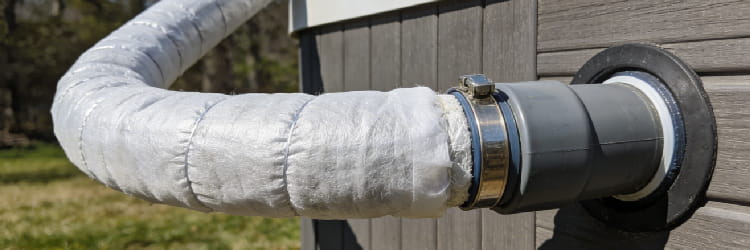
l Closed-Cell Foam: Offers an R-value ranging from R-3 to R-5. It's flexible and easy to install around curved pipes, making it a popular choice for residential hot tubs.
l Rigid Foam & Fiberglass: Provides higher resistance (up to R-7 for rigid foam). For optimal performance, the wall thickness of the insulation should at least equal the nominal diameter of the pipe.
l Thickness Guidelines: For a 2-inch pipe, a minimum of 1.5 inches of fiberglass insulation is recommended, reducing heat loss dramatically from 1400 BTU/hr to just 150 BTU/hr.
Installation Best Practices & Cost Savings
Proper installation is as important as the material itself.
Key Steps:
l Seal the Joints: Use mastic or self-sealing tape to cover seams, preventing air infiltration and moisture ingress.
l Protect Against the Elements: Ensure the insulation is weather-resistant, especially for outdoor spa installations where UV exposure and temperature fluctuations are common.
l Double-Layer Approach: Consider adding a secondary blanket between the water and the cover for an extra layer of protection, which can further reduce monthly energy bills.
Financial Benefits:
l ROI: Proper pipe insulation can double or even triple the cool-down time of your hot water lines, meaning the heater runs less frequently.
l Long-Term Savings: By reducing the standby heat loss, you can keep your water 2°F–4°F hotter than an uninsulated system, translating to noticeable savings over time.
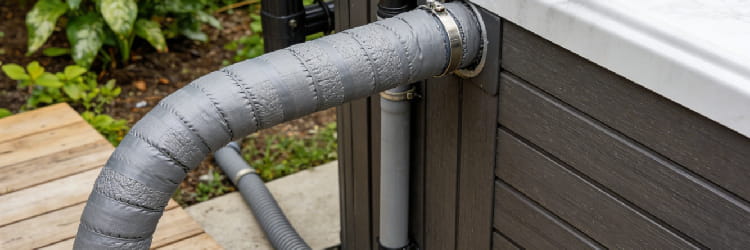
Insulating the plumbing of your hot tub is a low-cost, high-impact upgrade that significantly reduces heat loss, enhances comfort, and saves energy. By selecting the right material, ensuring proper thickness, and following best installation practices, you can enjoy a consistently warm outdoor spa experience while keeping operational costs in check.