Table of Contents
1.Introduction: From Excitement to "What Now?"
2.The "Must-Haves": Your Core Hot Tub Starter Chemicals
3.The "Weekly Warrior": Mastering the Hot Tub Shock Treatment
4.The "As-Needed Assistants": Optional but Helpful Chemicals
5.Putting It All Together: A Simple Weekly Water Care Routine
6.Conclusion: Your Journey to Crystal-Clear Water Starts Now
1.From Excitement to "What Now?"
Congratulations on your new hot tub! You’re picturing it already: steam rising on a cool evening, jets massaging away the day's stress, and the perfect, crystal-clear water inviting you in. But then you unbox the starter kit and reality hits. A collection of bottles and powders with labels like "pH Increaser," "Alkalinity Up," and "Non-Chlorine Shock." Suddenly, that vision of relaxation is clouded by a wave of chemistry-class anxiety.
If you're currently staring at these supplies and wondering, "what chemicals do you need for a hot tub?"—you are not alone. This is the single most common hurdle for new owners. The good news is that hot tub water care is far less complicated than it first appears. It’s a simple, repeatable routine once you understand the “why” behind each product.
This comprehensive hot tub chemical guide is designed specifically for beginners. We'll demystify the entire process, breaking down the essential hot tub chemicals you absolutely need, explaining what the optional ones do, and providing a clear, actionable routine. By the end of this article, you'll have the confidence to manage your spa water like a pro, ensuring every soak is safe, clean, and perfectly enjoyable.
2.The "Must-Haves": Your Core Hot Tub Starter Chemicals
Think of your hot tub water like a tiny ecosystem. To keep it healthy, you need to perform two fundamental tasks: keep it clean and keep it balanced. This requires a core set of hot tub starter chemicals that form the backbone of your maintenance routine.
The Guardian: Sanitizer (Chlorine vs. Bromine)
The single most important chemical in your arsenal is a sanitizer. Its job is to be the guardian of your water, actively killing bacteria, viruses, algae, and other harmful microorganisms that thrive in warm water . Without a sanitizer, your hot tub would quickly become a hazardous soup. The two most popular choices for this job are chlorine and bromine. You will choose one or the other, not both .
l Chlorine: A fast-acting and cost-effective sanitizer. It works quickly to eliminate contaminants. However, it can be less stable at the high temperatures found in hot tubs, breaking down faster and requiring more frequent application. Some people are also sensitive to its distinctive smell, which is actually caused by "chloramines"—byproducts created when chlorine neutralizes contaminants.
l Bromine: The preferred choice for many hot tub owners. Bromine is more stable in hot water, meaning it lasts longer and provides a more consistent level of sanitation. It has a much milder odor and is generally gentler on skin and eyes (Search Result 2). Even after it combines with contaminants to form "bromamines," it retains some sanitizing power, unlike chloramines. Its main drawback is a slightly higher upfront cost compared to chlorine.
To help you decide, here’s a direct comparison based on what matters most for a chlorine vs bromine hot tub setup:
Feature | Chlorine | Bromine |
Heat Stability | Less stable; breaks down quickly in hot water. | More stable; remains effective at high temperatures. |
Sanitizing Speed | Very fast; kills bacteria rapidly (Search Result 2). | Slower to act and dissolve, but provides long-lasting sanitation. |
pH Sensitivity | Highly effective at a lower pH, but loses significant power as pH rises above 7.6 (Search Result 2). | Remains effective across a wider pH range, making it more forgiving. |
Odor & Irritation | Can produce a strong "chlorine" smell and cause skin/eye irritation for some. | Much milder odor and generally considered gentler on skin and eyes. |
Cost | Lower initial cost and widely available. | Higher initial cost, but its stability may lead to using less over time. |
Our Recommendation for Beginners: While both are effective, bromine is often the more user-friendly choice for a hot tub due to its stability and gentler nature. However, if budget is a primary concern, chlorine is a perfectly viable and safe option when managed correctly.
The Foundation: Water Balancers (pH, Alkalinity, Calcium)
If sanitizer is the guardian, then water balancers are the foundation upon which that guardian stands. Balanced water is comfortable for you, protective of your hot tub's equipment, and allows your sanitizer to work at peak efficiency. Unbalanced water can lead to skin irritation, corrosion of expensive components like heaters and jets, and cloudy, uninviting water (Source 7, 11).
The three pillars of water balance are pH, Total Alkalinity, and Calcium Hardness.
1. pH Adjusters (pH Increaser & pH Decreaser)
l What it is: pH is a scale from 0-14 that measures how acidic or basic your water is. A pH of 7 is neutral.
l The Goal: The ideal pH range for a hot tub is 7.2 to 7.8 (Source 10, 13). This range is slightly basic, which is comfortable for your skin and eyes (similar to human tears) and protects your equipment.
l The Chemicals:
l pH Increaser (or pH Up): Used when your water test shows a pH below 7.2. This is typically soda ash (sodium carbonate) . Low pH is acidic and can corrode metal parts and cause skin irritation.
l pH Decreaser (or pH Down): Used when your water test shows a pH above 7.8. This is typically sodium bisulfate . High pH can cause cloudy water, scaly deposits on your spa shell and in the plumbing, and dramatically reduces the effectiveness of your sanitizer (Source 1, 8).
l Keyword in Focus: Your hot tub pH adjuster kit, containing both an increaser and decreaser, is an absolute non-negotiable for proper hot tub water care chemicals.
2. Alkalinity Increaser
l What it is: Total Alkalinity (TA) is a measure of the dissolved alkaline substances in your water. Its primary job is to act as a buffer for your pH.
l The Goal: The ideal TA range is 80 to 120 parts per million (ppm) (Source 1, 4, 16).
l The Chemical: You'll primarily use an Alkalinity Increaser (usually sodium bicarbonate, which is essentially purified baking soda) .
l Why it's CRUCIAL: Think of Total Alkalinity as an anchor for your pH. If your TA is in the correct range, your pH will be stable and resist drastic swings. If your TA is too low, your pH will bounce all over the place with every chemical addition or even just from people using the tub. This is called "pH bounce" and is incredibly frustrating.
l The Golden Rule for Beginners: Always test and adjust your Total Alkalinity before you adjust your pH (Source 13, 17, 18). By setting the foundation (Alkalinity) first, you make balancing the pH much easier.
3. Calcium Hardness Increaser
l What it is: Calcium Hardness measures the amount of dissolved calcium in your water.
l The Goal: The ideal range is typically between 150-250 ppm, though some sources suggest a wider range is acceptable.
l The Chemical: Calcium Chloride is used to raise the hardness level .
l Why it Matters: Water naturally wants to have minerals in it. If your water is too "soft" (low in calcium), it will try to get those minerals by leaching them from your hot tub's components—specifically metal parts like the heater element and plastic or acrylic surfaces. This causes corrosion and damage over time. By ensuring the water has enough calcium, you satisfy its "thirst" and protect your investment. If your source water is already "hard," you may not need to add any at all. You will rarely, if ever, need to lower calcium hardness, which typically requires partially draining and refilling the tub.

3.The "Weekly Warrior": Mastering the Hot Tub Shock Treatment
You've got your sanitizer killing germs and your water perfectly balanced. You're done, right? Not quite. To keep your water sparkling clear and truly clean, you need to perform a regular "deep clean" with a hot tub shock treatment.
What is Shocking and Why is it Crucial?
Sanitizers are great at their daily job, but over time, they get overwhelmed. Body oils, sweat, lotions, dead skin cells, and other organic waste (collectively known as "contaminants") build up in the water. Your sanitizer combines with these contaminants, creating smelly, irritating byproducts (the aforementioned chloramines or bromamines) and becoming less effective.
Shocking is the process of adding a large dose of an oxidizer to the water. This powerful dose does three things:
1.Destroys Contaminants: It breaks down and eliminates all that built-up organic waste.
2.Eliminates Byproducts: It gets rid of the smelly chloramines and bromamines, freeing up your sanitizer to work effectively again.
3.Kills Resistant Bacteria: It provides an extra boost of killing power to eliminate any lingering bacteria that may have survived the normal sanitizer level.
You should shock your hot tub at least once a week, and also after heavy use (like a party), if the water looks cloudy or smells off, or if you've been away for a while .
There are two main types of shock:
l Chlorine Shock: Uses a high concentration of chlorine. It's a powerful sanitizer and oxidizer. The downside is that you must wait for the high chlorine levels to drop back to a safe range before using the tub, which can take anywhere from 8 to 24 hours .
l Non-Chlorine Shock: Uses an oxidizer like potassium monopersulfate. This is a fantastic option for regular weekly maintenance. Its primary job is to oxidize contaminants and restore sanitizer effectiveness without significantly raising your chlorine or bromine levels. A major advantage is the short wait time—you can often use the hot tub just 15-20 minutes after adding it .
How to Shock Your Hot Tub: A Step-by-Step Guide
1.Remove the Cover: Take the hot tub cover completely off to allow the chemicals to "gas off." Trapping these gases can damage the underside of your cover .
2.Turn on the Jets: Turn the circulation jets on high to help distribute the shock evenly throughout the water.
3.Measure and Add: Following the instructions on the product label, measure the correct amount of shock for your hot tub's water volume. Slowly and carefully broadcast the granules across the surface of the water.
4.Let it Circulate: Allow the jets to run for at least 15-20 minutes to ensure the shock is fully dissolved and circulated .
5.Test Before Use: Leave the cover off for at least an hour. Before anyone gets in, test the water to ensure your sanitizer level (chlorine or bromine) has returned to the safe operating range. This is especially important after using a chlorine-based shock.
4.The "As-Needed Assistants": Optional but Helpful Chemicals
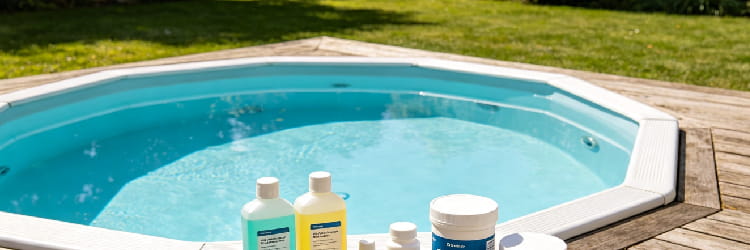
Beyond the essentials, a few other chemicals can be useful for tackling specific problems. Think of these as the specialist tools in your hot tub chemicals toolkit.
For Cloudy Water: Water Clarifiers
l The Problem: Sometimes, despite your best efforts, your water gets a bit cloudy. This is often caused by tiny, suspended particles that are too small for your filter to catch.
l The Solution: A Water Clarifier works as a coagulant. It causes these microscopic particles to clump together into larger masses that your filter can then easily trap and remove (Search Result 5).
l When to Use It: A clarifier is a great short-term fix to quickly clear up hazy water, especially if you have guests coming over. However, it is not a substitute for proper sanitation and balancing. If your water is persistently cloudy, it's a sign that the root cause—like low sanitizer, high pH, or a dirty filter—needs to be addressed .
For Other Common Issues: Defoamers & Metal Sequestrants
l Defoamer / Anti-foam: Foam can be caused by the buildup of soaps, lotions, and other substances reacting with the jet action. While the long-term solution is to shock the water and encourage guests to rinse off before entering, a few drops of defoamer can instantly eliminate foam for a quick fix.
l Metal Sequestrant: If your source water comes from a well or an area with high mineral content, it may contain metals like iron or copper. These metals can stain your hot tub shell and turn the water strange colors (green or brown) when you add chemicals. A metal sequestrant (or "stain and scale preventer") binds to these metals, keeping them locked in the water so they can't cause problems. It's a good idea to add a dose every time you refill your tub if you have "hard" or well water.
5.Putting It All Together: A Simple Weekly Water Care Routine
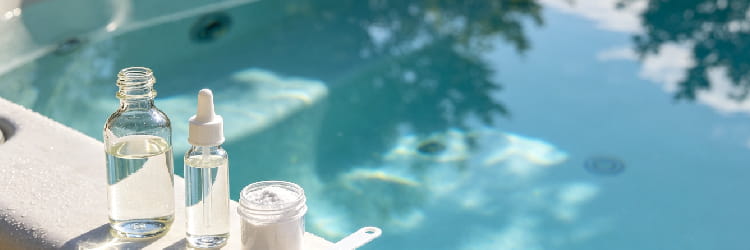
Feeling overwhelmed? Don't be. Here is what a simple, effective weekly routine looks like. It should take you no more than 10-15 minutes.
1.Test Your Water: Use high-quality test strips or a liquid test kit to check your levels. This is your road map.
2.Adjust Alkalinity First: If your Total Alkalinity is below 80 ppm, add an Alkalinity Increaser according to the package directions. Let the jets run for 15 minutes and re-test if needed.
3.Adjust pH Next: Once your Alkalinity is in range, check your pH. If it's outside the 7.2-7.8 range, use your pH Increaser or Decreaser to bring it into line.
4.Check Your Sanitizer: Check your chlorine or bromine level. If it's low, add more sanitizer granules or tablets to bring it up to the ideal range (typically 1-3 ppm for chlorine, 3-5 ppm for bromine).
5.Perform Your Weekly Shock: With the cover off and jets on, add your weekly dose of shock (non-chlorine shock is great for this regular maintenance).
6.Clean Your Filter (Bonus Step): While not a chemical, a clean filter is vital. Give your filter cartridge a quick rinse with a hose at least once a week. Every few months, give it a deep clean with a filter cleaner chemical soak to remove stubborn oils and grime .
6.Your Journey to Crystal-Clear Water Starts Now
Mastering your hot tub chemicals is the key to unlocking the full relaxation and enjoyment your spa was designed to provide. While the list of products might seem long, your regular routine boils down to three simple concepts: Sanitize, Balance, and Shock.
l Sanitize daily with Chlorine or Bromine to keep it safe.
l Balance weekly (or as needed) with pH and Alkalinity adjusters to keep it comfortable and protected.
l Shock weekly to keep it crystal clear and fresh.
By following this hot tub chemical guide for beginners, you're no longer just a hot tub owner; you're a water care expert in the making. The initial learning curve is short, and soon this routine will become second nature. Now, go enjoy that perfect, pristine, and relaxing soak you've been dreaming of.