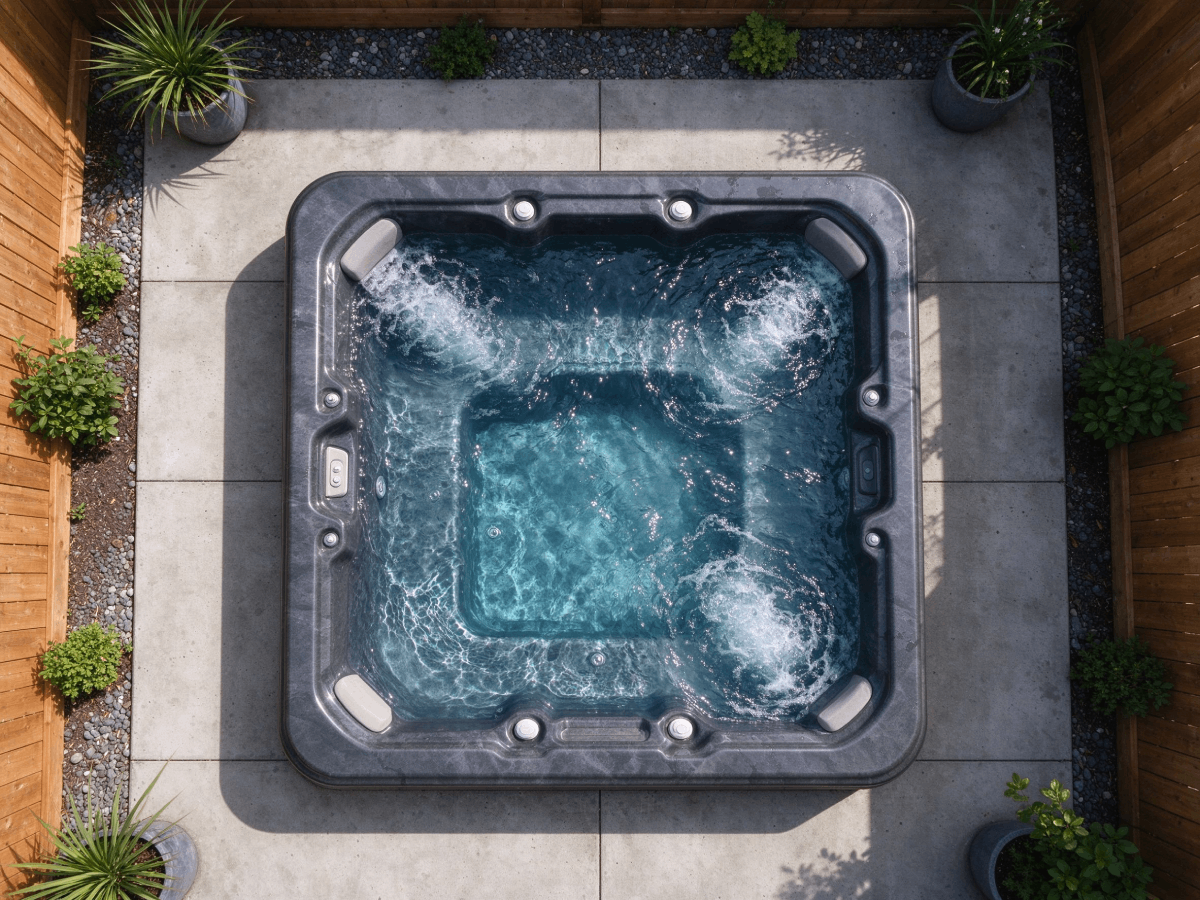
Salt water hot tubs generate their own chlorine from a low concentration of salt, while traditional tubs rely on you adding bottled chlorine by hand. Salt systems feel silkier on skin and need less weekly maintenance, but cost $500–$1,500 more upfront. Chlorine is cheaper to start and works in every tub, but means more testing and can be harsh on sensitive skin. This guide compares both systems across cost, comfort, maintenance, and equipment impact so you can choose the right water care for your spa. Get a quote on a tub with Pure Water Care salt system built in
Table of Contents
1. How Each System Works
2. Upfront Cost
3. Running Cost & Maintenance
4. Skin & Eye Comfort
5. Water Quality & Feel
6. Lifespan & Equipment Impact
7. Which Should You Choose?
1. How Each System Works
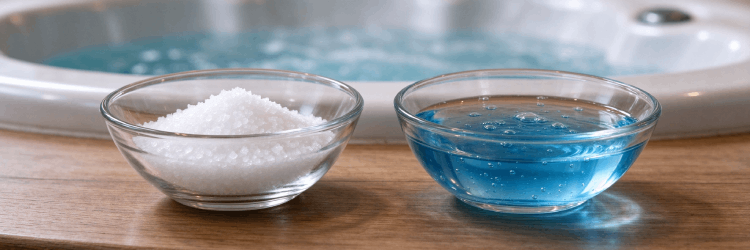
It helps to clear up a common misunderstanding first: salt water hot tubs still produce chlorine. A salt chlorine generator takes ordinary table salt (about 2,000–3,000 ppm, which is far less than the ocean's 35,000 ppm) and runs it across an electrolytic cell. That process converts the salt into a low, steady stream of chlorine—which then sanitises the water exactly the same way bottled chlorine does. The difference is that the salt cell manufactures chlorine for you, continuously, rather than you pouring it in by hand.
A traditional chlorine tub, by contrast, relies on you adding either dichlor granules, chlorine tablets in a floater, or liquid bleach on a regular schedule. You test the water, measure out the dose, and adjust as needed. There's no on-board generator—you're the sanitiser factory. If you're new to chemical balancing, our spa maintenance guide walks through the basics.
2. Upfront Cost
This is where salt water takes an immediate hit. A built-in salt system adds roughly $500–$1,500 to the price of a new tub, depending on the generator size and brand. Aftermarket salt conversions cost $400–$800 plus installation. You'll also need to buy the initial bag of salt (about $20–$40) to charge the tub.
A traditional chlorine setup costs nothing extra—you just buy chemicals as you need them, typically $20–$40 per month for an average tub. If budget is the deciding factor on day one, chlorine wins by a wide margin. Browse our full range of hot tubs to see which models include salt systems as standard.
3. Running Cost & Maintenance
Flip to the ongoing side, and the picture changes. With a salt system, you're basically set-it-and-forget-it once the cell is sized correctly. You top up salt when you drain and refill (about every 3–4 months), test pH once or twice a month, and occasionally replace the salt cell—typically every 3–5 years at a cost of $200–$500. The trade-off is that salt cells draw electricity, adding roughly $5–$15 per month to your energy bill.
With chlorine, you're testing water 2–3 times per week in heavy-use season, adding chemicals on schedule, and dealing with the inevitable swings between too little sanitiser (algae) and too much (red eyes, odour). It's not complicated, but it is regular work. Our Pure Water Care system is designed to automate this balance as much as possible, so you spend less time testing and more time soaking. You can also pick up test strips and chemicals from our spa care range.
4. Skin & Eye Comfort
This is the single biggest reason owners switch to salt water. Because the salt generator produces a low, consistent level of chlorine rather than big dumped-in doses, the water stays at a gentle 1–3 ppm instead of swinging to 5–8 ppm after a shock treatment. The result: water that feels silky, doesn't sting your eyes, doesn't dry out your skin, and doesn't leave that unmistakable "chlorine smell" on your swimsuit or hair.
Traditional chlorine can absolutely be balanced to a comfortable level—experienced owners do it all the time—but it takes more vigilance. If you or your family have sensitive skin, eczema, or wear contacts, the salt water experience is noticeably softer.
5. Water Quality & Feel
Owners consistently describe salt water as feeling "smoother" or "silkier" on the skin. Part of this is the lower chlorine level, and part is the natural minerals in the salt. The water also tends to stay clearer longer, because the continuous low-level chlorination prevents the algae blooms that can happen when you forget to add chlorine for a few days.
That said, salt water isn't maintenance-free. You still need to drain and refill every 3–4 months, balance pH, and shock the water occasionally—especially after heavy use or a rainstorm. The salt system handles the sanitiser, but it doesn't replace basic water care. Learn more about how our tub advantages keep water clean with less effort.
6. Lifespan & Equipment Impact
Here's the underdiscussed caveat: salt water is slightly corrosive. The chloride in the water, at the low concentrations used in spas, won't damage a quality acrylic shell—but it can accelerate wear on exposed metal if the water isn't balanced. That means the stainless steel fittings, heater elements, and jet internals need proper pH maintenance, and you should rinse off any metal cover lifter or steps after heavy use. Cheaper tubs with thin stainless fittings may see faster corrosion over 5–7 years.
Traditional chlorine, when over-chlorinated, can also degrade pillow inserts, gaskets, and vinyl covers over time. Neither system is hands-off on equipment care—but a well-built tub with 316-grade stainless components handles both systems without issue. Our Orpheus, Aurora XL, and Zephyr are plumbed with marine-grade fittings built for continuous salt use. If you need a spare cover or other parts, we ship directly.
7. Which Should You Choose?
Pick salt water if:
• You hate the smell and feel of chlorine on your skin.
• You want the lowest possible weekly maintenance.
• You have sensitive skin, allergies, or wear contacts.
• You're buying a new tub anyway and the upfront cost fits your budget.
Pick traditional chlorine if:
• You're on a tight budget and want to minimise upfront cost.
• You already own a tub without a salt system and don't want to retrofit.
• You're comfortable testing water a couple times a week.
• You want the absolute simplest, most universal chemical system—there's no salt cell to replace.
The honest summary: salt water is the better experience for most owners, and the upfront cost pays for itself in saved chemicals and comfort over 2–3 years. But it isn't magic, and traditional chlorine, when maintained properly, delivers perfectly clean, safe water at a lower entry cost. Get a quote on a VIRPOL tub with our Pure Water Care salt system built in, download our buying guide, or talk to our team about which water care system fits your lifestyle.